
Parma Previous Residents by Era
No single record can carry the whole story. Each one was created for a different purpose on a different date. Pull the current parcel view first and save the stable property identifiers. Then work backward through Recorder documents. Maps, tax records, appraisal cards, and address-arranged directories bridge the way into older periods. Keep the limits in mind. A name on a deed is not proof of residence. A directory line is not proof of ownership.
| Source | Years it covers | Where held | What it can show |
|---|---|---|---|
| Cuyahoga Recorder documents | 1810-present | Official Records Search and Recorder counter | Recorded deeds and related documents; check the image and legal description. |
| County original maps | About 1860-1945 | Cuyahoga County Archives | Historic lot, street, and structure context through appointment property research. |
| County tax records | About 1819-1986 | Cuyahoga County Archives | Taxpayer and value changes to compare with a legal description. |
| Real-estate appraisal cards | About 1935-1970 | Cuyahoga County Archives | Property and building-era clues rather than household proof. |
| Parma City Directory | 1941 | Cleveland Public Library | Parma-specific alphabetical listing. |
| Parma City Directory including Parma Heights | 1946, 1948, 1951, 1953, 1955, 1956, 1958-1963 | Cleveland Public Library | Directory entries with known gaps between volumes. |
| Cleveland-area criss-cross | 1923, 1925, 1926, 1960-1993, 1996-2010 in print | Cleveland Public Library | Address to listed occupant or telephone, where listed. |
| Federal census | Released schedules through 1950 | NARA and library databases | A household snapshot tied to its census date. |
| City permits | No verified historic online coverage date | Parma City Hall or Building Department | Existing address-specific permit or inspection records if held. |
Assign each question its proper source. Recorded property documents come from the Recorder. Directories give a historical address listing, and the census shows household composition. For questions about early buildings, the Archives collections are the documented fallback. Parma's online permit material serves applications rather than an open historical-results index, so a dated, address-specific request is the right route for an existing city record.
Parma Previous Residents Need a Parcel
Start the backward trail in Cuyahoga County MyPlace. Look up the property by address, owner, or parcel number. Save each item as its own field. These include the current situs address, parcel number, legal description, owner spelling, transfer date, and tax mailing address. Cuyahoga displays parcels in the pattern 000-00-000. That number is a durable bridge between records. A street number or mailing address can change on its own.
Do not confuse the situs address with the tax mailing address. The Fiscal Office defines the mailing address as where a taxpayer receives a bill. It is not evidence anyone lives at the property. MyPlace is a free county geographic and analytical service. Its own disclaimer notes that the originating agency's official record controls. Treat it as the correct starting point for a document lead. It is not the final word when a legal question turns on the record itself. The county's Transfer and Recording page describes the linked property, map, transfer, and recording functions behind this first pass.
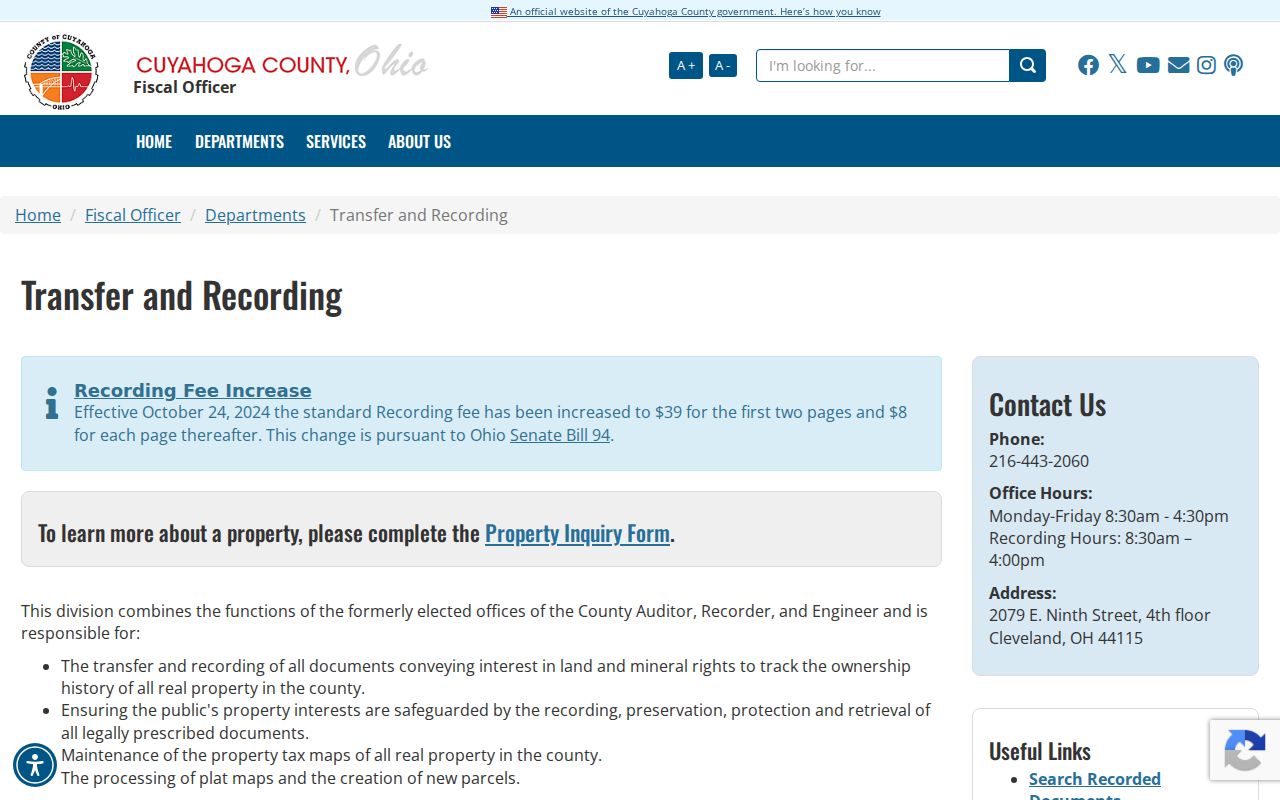
The county workflow connects a property lead to its recorder and map resources. Each source still needs a date and a careful reading in context.
Trace Parma Past Residents Through Deeds
A deed chain starts with a property record, never with a guessed household. Open the MyPlace Transfers tab first. Note the displayed transfer date and parties, then hunt for the matching filing in the Cuyahoga Official Records Search. The Recorder's Quick Search accepts grantor or grantee, subdivision, document type, document number, or a dashed parcel number, with date controls plus separate Index Only and Index & Full Text OCR choices. Read the recorded document image when one is available. The index row alone is not the record.
- Copy the parcel number and legal description from MyPlace, along with the current transfer date and named parties.
- Search the Recorder by party, parcel, document type, or document number, narrowing the recorded date around the transfer.
- Read the matching document for grantor, grantee, type, recording date, document number, legal description, and any prior-record reference.
- Search the seller as a possible earlier grantee and repeat only when the legal description and chronology stay on the same parcel.
- Flag a refinance, estate filing, trust action, correction, or entity transfer instead of treating every party as a past resident.
- Grantor and grantee
- The grantor conveys an interest in the document; the grantee receives it. Those legal roles do not by themselves prove residence.
- Chain of title
- The sequence of recorded transfers connected by the same property interest and legal description.
- Legal description
- The lot, subdivision, or other formal property wording used to keep a search tied to the same parcel when an address changes.
- Index and OCR
- An index search uses recorded fields; OCR searches text recognized from document images and remains a discovery aid, not a substitute for reading the image.
The Recorder describes filed documents from 1810 to the present. Its portal certification date shifts over time, so treat it as an operational status marker rather than a historic cutoff. When a screen result will not resolve an older description, keep the document number and take the question to the Recorder counter, the Map Room, or the Archives instead of forcing a match.
Parma House History in County Archives
Cuyahoga County Archives offers the deeper property route once the modern index runs dry. Its house-history materials include original map volumes from roughly 1860-1945, tax records from about 1819-1986, and real-estate appraisal cards from about 1935-1970. A small building outline on an Archives map proves a structure stood there in that map year. It says nothing about a household. Property research at the Archives requires an appointment. Staff ask researchers to keep the street variant, parcel or lot, legal description, prior owner, map volume or page, and document number together, because street names, property descriptions, and dimensions all change over time. A jump in tax-duplicate value can help narrow a construction period, but pair it with the map and the property description before calling it a build date. Cuyahoga County Archives property-research instructions give the appointment method and the record bands cited here.
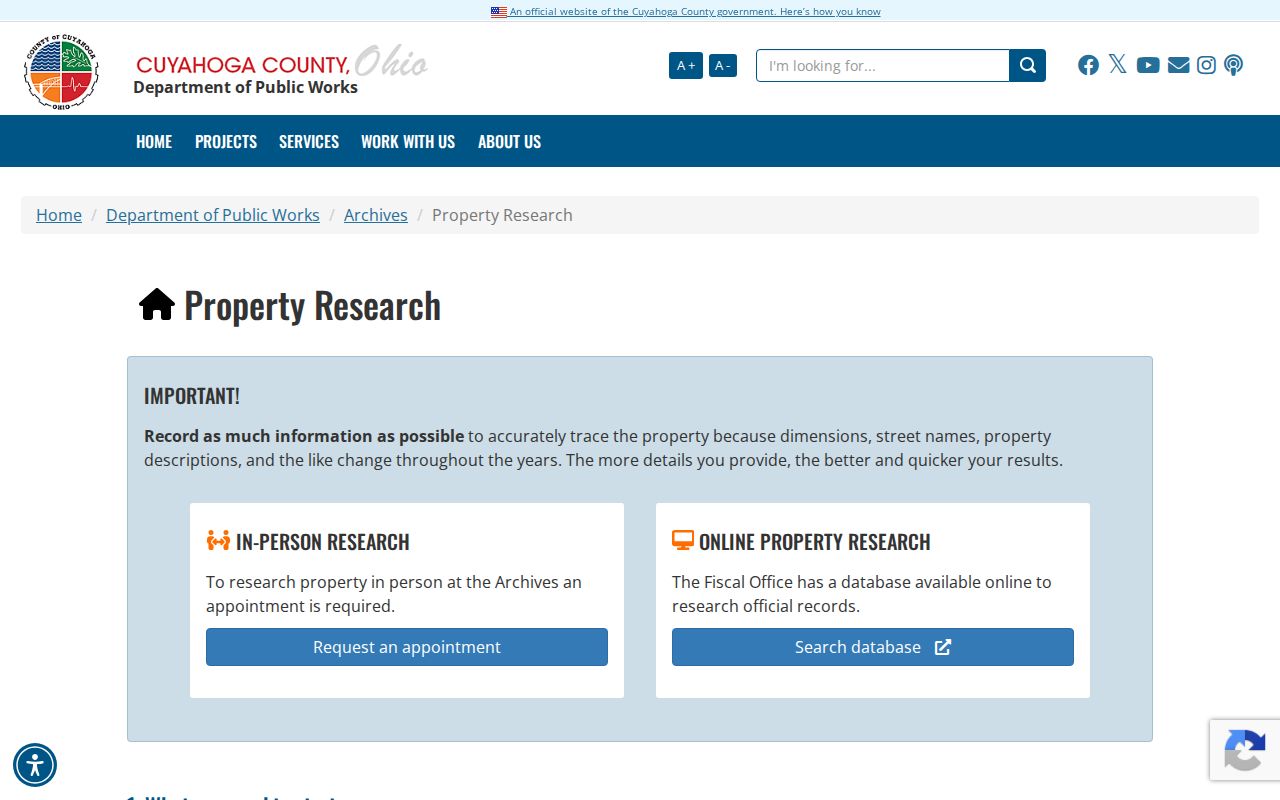
Archive maps, tax records, and appraisal cards build a property timeline. Keep that timeline separate from the evidence used to name a historical household.
Parma Previous Residents and Street Aliases
Street variants can quietly break an otherwise sound search. City history records that State Road began as a private plank road. It carried the name West 35th Street in part during the early 1900s. The road became State Route 94 in 1957. Search both State Road and West 35th Street in older directories, maps, and documents. Then confirm the lot and legal description before joining two hits. Older material may also speak of Parma Township, Parma, and Parma Heights. Cleveland-style postal labels may appear too, along with village and city terminology. Parma Heights separated from the original township in 1911. Parma became a village in 1924 and a city in 1931. Treat these labels as residents directory research variants. Do not use them as license to merge nearby addresses or unrelated parcels.
Parma Past Residents in Directories
A deed only settles who owned the land. A different question is who actually lived at an address in a given year. For that, Parma researchers turn to directories and census schedules. Cleveland Public Library holds criss-cross directories organized by street rather than name. An entry there can reveal the listed occupant and, when printed, a telephone number. Match the listing to its edition date. Then weigh it against a released census, an obituary, a probate file, or a later deed transfer to build a fuller trail of past residents of Parma.
- Choose the criss-cross or Parma directory edition closest to the address year and copy the street, name, and printed notation exactly.
- Check the closest available earlier and later editions, preserving the years the Parma run does not contain.
- Use the corresponding federal census release to test age, birthplace, relatives, street, or enumeration-district context.
- Compare the household clue with the parcel's transfer chronology, without making the listed name an owner by default.
- Use a death, obituary, probate, or later-directory source to explain a departure only when the dates and identity evidence fit.
The Parma city directory collections page details which Parma volumes survive. It also shows where the gaps fall. Remember that the released federal census stops at 1950. Each census captures a single household on one enumeration date. Cross-checking editions pays off. Surnames, initials, and street labels change over time, and a lone name hit can mislead.
Parma Previous Residents in Probate
Probate records answer what directories cannot. A directory or census lead may suggest a family tie. But a probate file can prove it or explain how a property changed hands. The FamilySearch Cuyahoga Probate Files collection spans 1813 through 1932. It names the decedent or testator, heirs, executor or administrator, and witnesses. It also lists dates plus property descriptions and values. Cases are arranged by docket number, case number, and date. Some docket groups, however, are not publicly available or imaged. Treat a probate hit as an endpoint to compare with Recorder documents and a map. It is not an address directory in itself. An heir, a fiduciary, or a property description can point toward a parcel. A missing image may simply reflect a restriction or an unscanned item. That is not proof that no estate existed. County Archives also keeps probate estate files from 1813 to 1918, with indexes reaching 1993. That custodial fallback helps with a specific case question. The FamilySearch Cuyahoga Probate Files collection is the source behind this route.
Probate material earns its place when its names, dates, and property description agree with the other records. Agreement across sources is what corroborates a historic family or property link.
Lawful Parma Previous Residents Research
Past-resident research in Parma suits family history, estate questions, house history, and plain curiosity. Ohio's public-record system still draws hard lines. Confidential voter registrations, Safe at Home participant addresses, and sealed files stay protected. Never use a historic lead to track, harass, or harm a living person. Do not read present-day household membership from an old directory. The same goes for a deed or tax record.
Use the least intrusive record. Stop once the documented family or property question is answered, and ask the custodian for a restricted or uncertain record instead of trying to reconstruct private details.
County Archives handles focused requests by email, mail, or its own research process. That route matters when the record you need is not online. Give the record type, surname, and relevant dates. Include any volume, page, or petition number, and a mailing address. The Archives allows up to ten volumes or documents per request. The first forty photocopies are free. Well-specified requests, the Archives says, aim for a three-week response. Parma address-specific permit or inspection questions go elsewhere. Send the city custodian or Building Department the address and parcel if known. Add the date range, department, and the format you want.