
Parma City Directory Collection Years
The known Parma run is specific and uneven. Cleveland Public Library identifies a 1941 Parma City Directory from the Cleveland Ohio Service Company, followed by Cleveland Directory Co. volumes that include Parma Heights. The listed volumes are useful precisely because their gaps are known. A missing volume does not show that a family left an address, and it does not create an annual Parma series that the collection does not contain.
| Collection | Documented years | Where held | Access route |
|---|---|---|---|
| Parma City Directory | 1941 | Cleveland Public Library | Library directory guide identifies the dedicated Parma volume. |
| Parma City Directory including Parma Heights | 1946, 1948, 1951, 1953, 1955, 1956, 1958-1963 | Cleveland Public Library | Cleveland Directory Co. run listed by volume. |
| Cleveland-area criss-cross directories | 1923, 1925, 1926, 1960-1993, 1996-2010 in print; defined microfilm subsets | Cleveland Public Library Center for Local and Global History | Address-arranged listings where a listed telephone number appears. |
| Cleveland and suburban directories | 1837-2000 at WRHS; 1837-1972, not inclusive, at County Archives | WRHS and Cuyahoga County Archives | Check the selected edition for suburban coverage. |
For a 1940s or 1950s Parma question, begin with the closest listed Parma edition. For a year not represented, look sideways to Cleveland-area directories, telephone books, tax records, or electoral lists. The collection date, edition title, and geographic scope belong beside every note, especially where a street could appear under Parma, Parma Heights, or a broader metropolitan label.
Parma City Directories Have Gaps
The documented sequence is a local records story in its own right. After the 1941 volume, the identified Cleveland Directory Co. volumes start in 1946, then skip through 1963. The visible gaps include 1942-45, 1947, 1949-50, 1952, 1954, and 1957. Treating those blanks honestly keeps a research timeline from turning a library shelf into a false claim about a person or property.
County Archives and WRHS offer a broader context when a separate Parma volume is absent. The Archives holds Cleveland city directories from 1837 through 1972, not inclusive, while WRHS lists Cleveland city directories, including east and west suburbs, from 1837 through 2000. Neither range promises coverage for every place or every year, so the catalog and title page are the first checks. A nearby metropolitan listing can be a lead, not a substitute for a Parma-specific entry.
Reading a Parma City Directory Entry
A city directory entry should be read like a compact, dated index record. A 1951 Cleveland City Directory page in the Cleveland Public Library Digital Gallery shows the common regional pattern: surname first, given name or initials, spouse or widow notation, a shortened descriptor, and a residence or organization address. The exact shorthand can change by publisher and year. Find the abbreviation page in the same volume before expanding a symbol into a conclusion.
| Name form | Record the surname, given name, initials, suffix, and spelling exactly as printed. |
|---|---|
| Family notation | A spouse name in parentheses or a widow notation can distinguish similarly named people, but does not prove the full household. |
| Printed descriptor | Copy any role, organization shorthand, or other descriptor as a period-specific label rather than a current fact. |
| Residence field | Note the house number, street, unit, and the volume's own residence notation such as h or r. |
| Cross-reference | Preserve any “see” reference, which may point to a spelling variant or another entry. |
- Criss-cross directory
- An address-arranged directory that begins with an exact or approximate address and may give a listed occupant name and telephone number.
- Householder index
- An alphabetical arrangement that helps locate a printed household entry by name before checking the address listing.
- Abbreviation key
- The publisher's explanation of its shortened terms and symbols. Photograph or transcribe it with the entry because the key can vary by edition.
The Cleveland Public Library's digitized 1951 directory page provides a visible regional-format example, not evidence that its sample names were Parma residents.
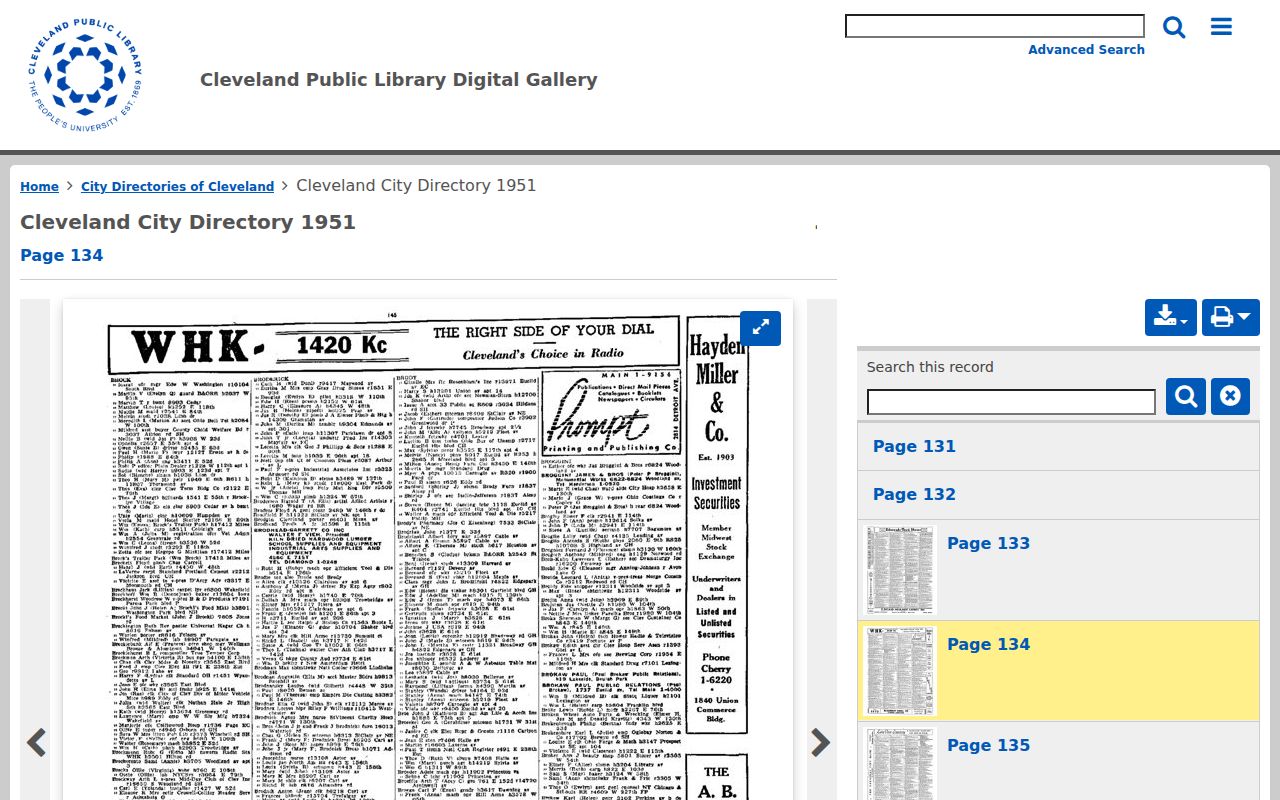
Use a digitized example to learn the layout, then return to the title, locality, and year of the actual Parma edition before recording an entry.
Parma Criss-Cross Directory Listings
Criss-cross volumes reverse the usual name-first method. Cleveland Public Library describes them as address-arranged directories of residences and organizations that generally give the occupant name and telephone number when a number was listed. The researcher needs an exact or approximate address. For Parma family research, that makes the collection useful when the address is known but the surname is uncertain.
CPL documents print holdings for 1923, 1925, 1926, 1960-1993, and 1996-2010, with microfilm for 1923, 1926, 1960-1993, 1996-98, and 2009-12. Cleveland and most suburban directory volumes began adding address or criss-cross listings at the end of the book in 1929, but an individual volume still has to be checked for the relevant suburb. A listed name is a clue for that edition, not proof of ownership or every person at an address.
Parma City Directory Access Points
The Cleveland Public Library guide is the best collection map for the dedicated Parma volumes and the local criss-cross shelf. It also distinguishes residential telephone books from city directories. The library says its Center for Local and Global History keeps comprehensive Cleveland-area telephone directories, with the current year in print and earlier years on microfilm. A telephone subscriber may be absent, abbreviated, or placed in a nearby municipality's book, so a phone listing needs the same careful reading as a directory entry.
WRHS is the regional fallback for directories, tax duplicates, land-ownership atlases, cemetery material, and federal population schedules. County Archives adds its own Cleveland directory run, a biographical clipping file around 1914-1976, and property or election records that can corroborate a dated listing. Confirm catalog access before travel, then ask for the exact title, edition, or record group instead of requesting a vague people search.
Western Reserve Historical Society's genealogy holdings describe the broader regional material that can fill a Parma directory gap.
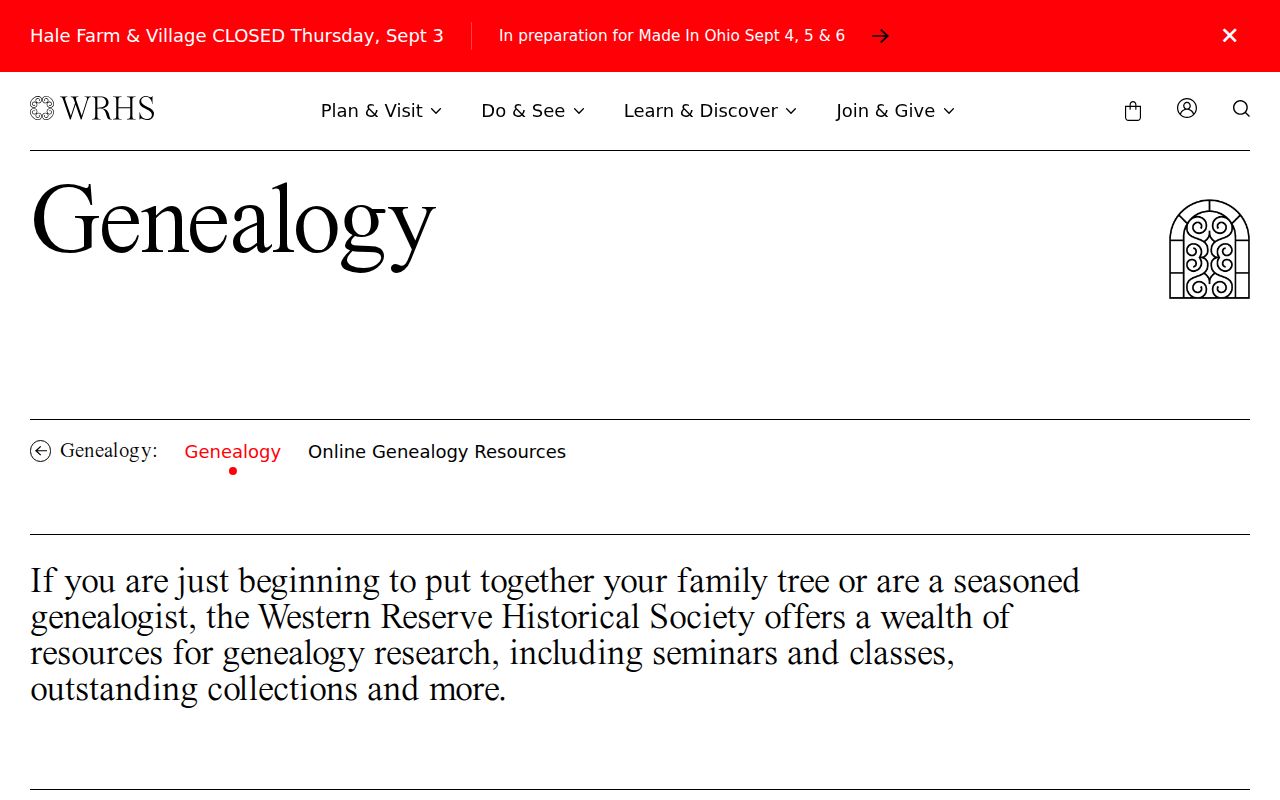
The regional collection is most useful when its catalog confirms the date and locality that the dedicated Parma volumes do not supply.
Trace Parma City Directory Households
A useful household trail moves from one confirmed printed entry to another, not from a name resemblance to a conclusion. Start with an address in an exact-year criss-cross volume or a surname in an alphabetical Parma or Cleveland directory. Copy the name, initials, suffix, spouse notation, street, and source year. Then compare the closest available editions, keeping the blank years visible in the notes.
- Locate the first available entry and capture the title page, year, locality, and exact wording.
- Check later and earlier available volumes for an address change, a spouse notation, or a changed printed descriptor.
- Read the same street in the address-arranged listing where the edition includes it, looking for a spelling variant or a nearby address clue.
- Pair the closest available directory edition with a released federal census, using age, birthplace, relatives, street, or enumeration district to test the match.
- Use a property parcel and recorded transfer only to answer the ownership question, then use probate, death, obituary, or later directory evidence to close a historical interval.
A disappearance can mean a move, a death, an unlisted telephone, a publisher change, or simply a missing volume. Census schedules are household snapshots, and the released federal series reaches 1950. For an older family trail, Probate files, cemetery material, and newspaper databases can add a dated endpoint. A directory result that needs a modern identity check can be tested through the Parma resident lookup methods rather than treated as a present-address claim.
Parma Directory Images and News
Directories give names and address lines. Local images and newspapers can supply the period setting that helps distinguish a street, a development corridor, or a place name. Cleveland State University's Parma collection brings together digitized local images and a historical bibliography. Its materials are useful context, but a photograph or landmark description should be corroborated with a caption, directory, census, or official record before it is tied to a person.
Cuyahoga County Public Library also offers historical newspaper and obituary resources through its library services, including a Plain Dealer resource from the first issue in 1845 through the present. The Library of Congress catalog identifies Brooklyn-Parma News Times for 1940-1948 and its successor Brooklyn-Parma News for 1948-1957. No currently public, full-text Parma-specific obituary index was verified in the research, so use the library route and County Archives rather than assuming an open name search exists.
Cleveland Memory's Parma collection is the digitized source for the local-history image collection.
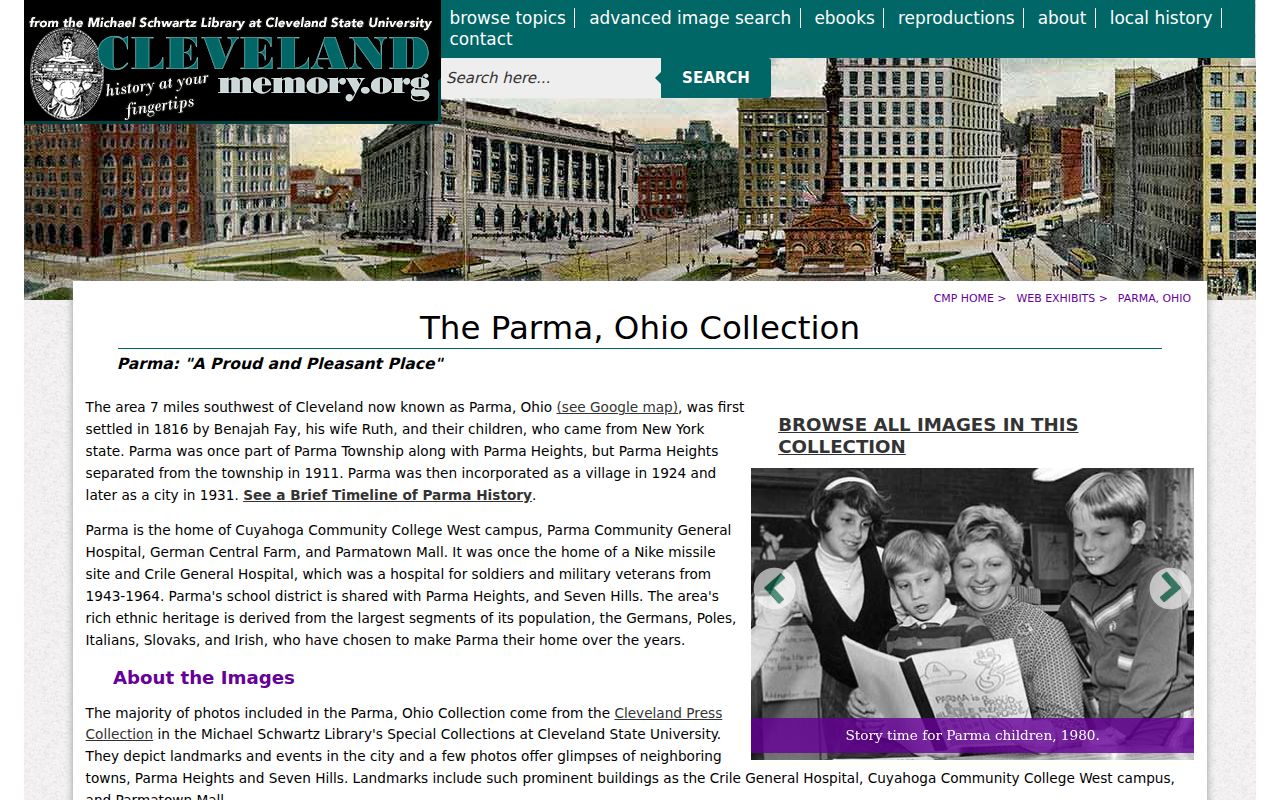
The collection can help date a neighborhood setting or locate a historical lead, while the directory edition remains the evidence for its printed listing.
Parma City Directory Family Evidence
Parma's municipal labels changed over time. Older records can use Parma Township, then village or city language, while nearby Parma Heights separated from the original township in 1911. The Recorder and County Archives carry county records that extend earlier than a city office. Search the appropriate historical label, street variant, and legal description before treating a negative directory result as final.
Street wording can matter just as much as the municipal label. City history says State Road was partly called West 35th Street in the early 1900s before becoming State Route 94 in 1957. A directory, map, or newspaper search that produces no State Road result may need the West 35th Street variant. Match any apparent result back to the house number, source year, and property description instead of assuming that a familiar road name identifies the same place.
Keep uncertainty in the final note. The strongest family-history result identifies the directory edition, the entry itself, and the separate record that supports the relationship or property connection. This approach respects the irregular Parma city directory run and leaves room for later evidence to revise a timeline.